You’ve poured heart, time, maybe good money into marketing videos, but the numbers don’t lie: viewers are dropping off, click-through is meh, conversions are far from great. You’re not alone; many fall into the same trap. The good news is: you can fix this, and pro editing is a big lever. Let’s dig into why your marketing videos might be underperforming, and how the right editing touches can turn viewers into converts.
The Cold Stats: Why Conversion Is Low 📉
Before how, let’s see what the data says. These numbers show it’s not just feeling, there’s a systemic gap.
Websites with video content convert at about 4.8%, compared to ~2.9% for sites without video.
Adding video to landing pages can boost conversion rates by up to 80%.
Around 89% of businesses already use video as a marketing tool. But many of those aren’t getting the full benefit, engagement, retention, brand trust, etc.
These stats mean: having a video isn’t enough. If your marketing videos are weak in key areas, the results will lag.
What Stops Marketing Videos from Converting 😥
Here are common pitfalls. If any of these sound like your videos, editing may be the weak link or the missing firepower.
Weak first few seconds: Viewers decide fast. If the opening is slow, generic, or confusing, many drop off.
Message unclear or jumbled: If people can’t tell what the offer or purpose is, they bail. Good editing helps you sharpen what matters: product benefit, unique selling point, and CTA.
Poor audio or visual quality: Grainy video, bad lighting, muffled audio = signals of “low effort.” They reduce trust.
Wrong pacing: Too slow = boring. Too fast = confusing. Not enough breathing space or wrong cuts kill retention.
Not platform-friendly: What works on YouTube might bomb on TikTok or for Instagram marketing videos or Instagram reel advertising. Aspect ratio, length, sound (many watch on mute), captions, these change per platform.
Bad or missing call to action (CTA): Even if they watch, if they don’t know what to do next (or aren’t motivated to), conversion won’t happen.
Lack of emotional or narrative pull: People respond to stories more than specs. If your video is just features + text, you might fail to connect.
Poor optimization for mobile, sound-off, and speed: Many viewers watch on mobiles, sometimes with no earphones or loud ambient noise. You need visuals + subtitles that communicate well even without sound.
No branding or inconsistent style: If visuals, tone, color, and branding are all over the place, it looks amateur and erodes trust.
Also read: How Outsourcing Video Editing Helps You Post More Content in Less Time
How Pro Editing Fixes These Problems 😎
This is where Solaris Studio (or any agency with editing talent) becomes your game-changer. Here are how professional video editing interventions solve the above issues, along with specific editing techniques to request or include.
😓 Problem | 😌 Solution |
Weak first few seconds | Hook-oriented opening: use fast cuts, intriguing visuals, tease value in first 5-10 seconds. Trim fat. Start with an action or a question. |
Unclear message | Storyboarding in post: ensure the narrative flow is logical. Rearrange footage to highlight benefits early. Use text overlays or motion graphics to reinforce key points. |
Poor audio/visual | Color grading, proper lighting correction, frame cleanup. Audio editing: remove noise, balance levels, maybe add music & sound effects that match the product’s tone. |
Bad pacing | Cut rhythm: mix fast cuts for energy, slower ones for info. Use transitions that suit the story (not just flashy for the sake of it). Use B-roll smartly. |
Platform mismatch | Create different versions: vertical for Reels or TikTok video advertising, square or landscape for YouTube. Use auto captions/subtitles. Tailor thumbnail/intro to platform. |
Weak or missing CTA | Add graphic/text CTA, voice-over, or on-screen prompts. Place CTA at moments of peak engagement. |
Low emotional or narrative pull | Include storytelling arcs, user testimonials, and case studies. Use motion graphics to dramatize data. Show before/after or problem → solution structure. |
Poor mobile/sound-off experience | Use bold visuals, captions/subtitles, and avoid overly small text. Make sure scenes are readable without audio. Optimize compression so load time is good on mobile. |
Inconsistent branding | Use style guides: same fonts, color palettes, brand assets. Templates for intros/outros. Motion graphics that echo your identity. |
Real-Life Case: Before & After
Here’s a mini case study (hypothetical but based on common variants) to illustrate:
A SaaS product featured a video ad with a generic voice-over, a bland opening, and no captions. CTR was low, bounce rate high.
They hired pro editors. Solutions: tightened the first 8 seconds to show problem → benefit; added bold text overlays so message comes even if muted; used clean motion graphics; added a strong CTA with brand logo; made mobile-friendly vertical version for ads.
Result: CTR doubled, conversions up ~50%, and people watched more of the video on average.
Integrating With Related Channels & Formats
Since you do video editing / motion graphics, you’ll want to ensure your marketing videos strategy touches all relevant platforms and formats. These LSIs (latent semantic indexing keywords) aren’t just SEO fluff; each represents a format or channel with specific demands.
YouTube advertising: longer form works, intros, thumbnails matter hugely, and pacing must keep the viewer from skipping after 5 seconds.
Video advertising: for ads (pre-roll, mid-roll), there’s less patience; need a strong hook, concise message.
Instagram marketing videos & Instagram reel advertising: very short, often silent start, vertical format, need visual punch, trending music.
TikTok video advertising & promoting your tiktok video: ultra-short formats, trend awareness, fast editing, raw/authentic feel, but polished enough to stand out.
You’ll likely want to produce multiple versions of your video for these: e.g. main ad for YouTube, vertical cut for reels/TikTok, short teaser, etc. Pro editing helps make all versions consistent and solid without reinventing from scratch every time.
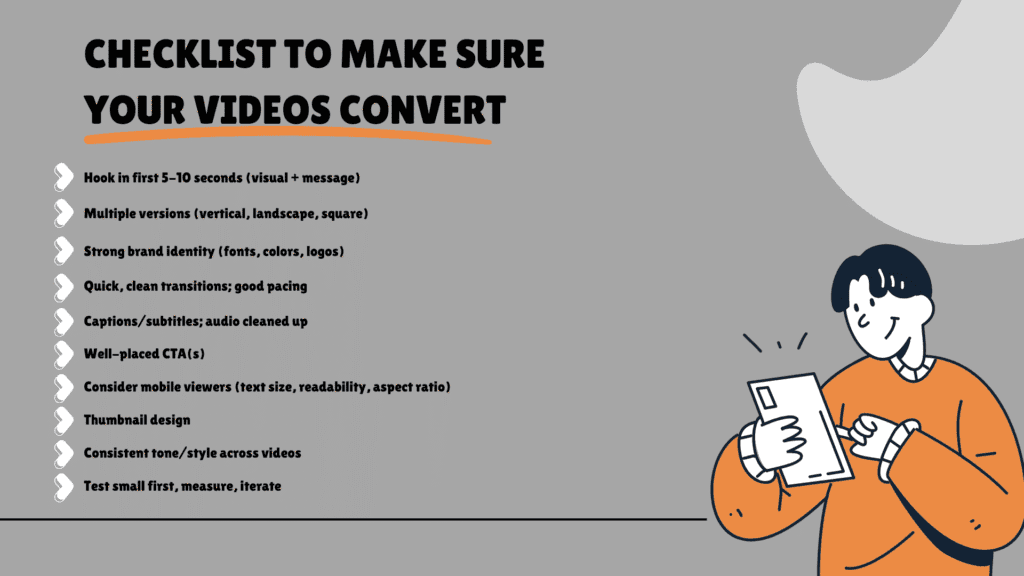
Checklist: What to Ask for / Ensure When Getting Pro Editing
If you hire pro editors or use an editing agency, here’s what to brief or check for to make sure your videos will convert.
Final Thoughts: Don’t Blame Everything on Format It’s Story + Craft
Marketing videos are often blamed for low conversions, but the real issue is rarely format alone. The story, edit quality, user experience, platform alignment, and clear action are what separate videos that convert from those that don’t. Pro editing doesn’t just make your video look nicer; it makes it work better.
Frequently Asked Questions
1. Why aren’t my marketing videos converting even though they look professional?
Professional visuals don’t guarantee conversions. A video can look great but still fail if the story isn’t clear, the first few seconds don’t grab attention, or the call to action is missing. Viewers decide quickly whether to keep watching or scroll away. Pro editing fixes this by tightening the opening hook, improving pacing, adding subtitles for sound-off viewing, and highlighting the main value of your product or service right away. High-quality footage is the foundation, but editing is what makes people stay, trust, and take action.
3. What editing changes actually improve conversions in marketing videos?
The edits that make the biggest difference are the ones that improve engagement and clarity. Cutting the video so the first 5–10 seconds hook attention is the most important. Adding subtitles means your message lands even if people watch with the sound off. Clean audio, balanced color, and a rhythm that matches the story make the video easier to watch and trust. A clear call to action, shown visually or spoken, ensures the viewer knows what to do next. These changes sound simple, but they directly impact watch time, click-through rate, and conversion.
2. Do I really need different edits of my video for YouTube, Instagram, and TikTok?
Yes, you do. Each platform has different viewer habits and technical formats. A video that works on YouTube, where people expect longer content, won’t perform well on TikTok, where users expect quick, vertical clips with energy in the first few seconds. Instagram reels are similar, fast, punchy, and often watched without sound, so captions and strong visuals are key. Pro editing helps you adapt one main video into platform-ready versions: horizontal for YouTube advertising, vertical for Instagram reel advertising, and trend-friendly short cuts for TikTok video advertising. This tailoring is one of the biggest reasons edited videos convert better.
4. How do I know if my low video conversions are caused by editing or bad targeting?
Low conversions can come from both, but editing often plays a bigger role than clients expect. If your targeting is correct but the video is too slow, confusing, or missing a call to action, people won’t convert. Editing can’t fix a completely wrong audience, but it can dramatically improve how your message lands with the right audience. To test this, keep your targeting the same and try new edits, for example, shorten the intro, add captions, or change the CTA placement. If watch time and clicks improve, the problem was editing. If nothing changes, then your targeting or offer may need adjustment.

related articles